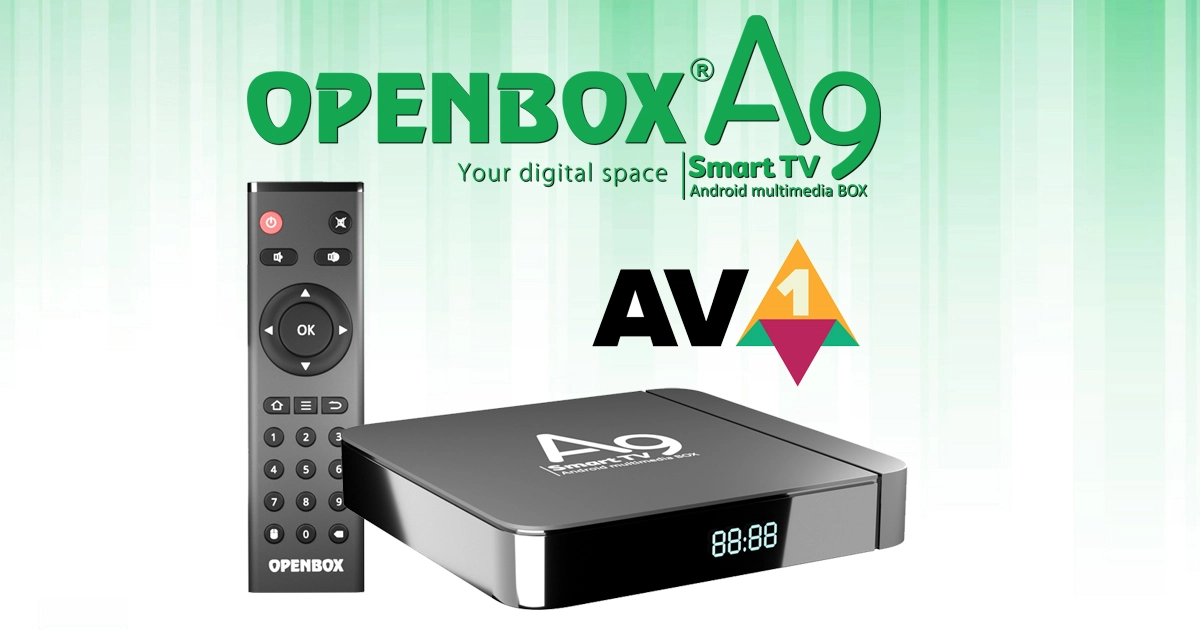
Openbox A9 Ultra HD
Nowadays, there is no need to explain what a high-quality Android IPTV/OTT set-top box is and how it is better than the Smart TV built into your television. These set-top boxes have become similar to smartphones, aging literally in a couple of years and requiring the purchase of a new model with a faster processor, support for new codecs and formats, and a new version of Android.
This naturally surprises those who are used to buying things for many years rather than upgrading with each new model. One could even try to add a theory about planned obsolescence. However, the answer lies on a somewhat different level: telecommunications devices that interact over the Internet, including smartphones and our Android IPTV/OTT set-top boxes, are at the forefront of technological development.
Every year, the largest corporations offer us new versions of operating systems and processors (SoCs). As a result, devices become more efficient, faster, safer, more functional, consume less energy, and so on. Not long ago, the entire industry was transitioning en masse from the MPEG-4 (H.264) video compression codec to HEVC (H.265), which is required for 4K (Ultra HD) television. It seemed: what more could one dream of?
At first glance, the AV1 codec may seem like something “for tomorrow.” But in reality, it is already here: popular streaming services such as Netflix, YouTube, Twitch, and Vimeo are using it. Since these corporations have implemented support for this new video compression algorithm so quickly, it speaks to the importance of its advantages:
- The new AV1 codec allows video streams to be compressed 20–40% more efficiently compared to the already widespread HEVC (H.265). This means less network load, better quality, and more stable performance on slow internet connections.
- AV1 is an open and free video coding format, initially developed for video delivery over the Internet.
- The first obvious advantage is that we, as users, do not pay royalties for each purchased device. The second is its open development model. A clear example: open HTML5 replaced the once-popular Macromedia Flash. And do we need to mention popular operating systems that initially evolved from open projects? (including Android and Mac OS…)
Let’s return to the star of our discussion – the Openbox® A9 Ultra HD.
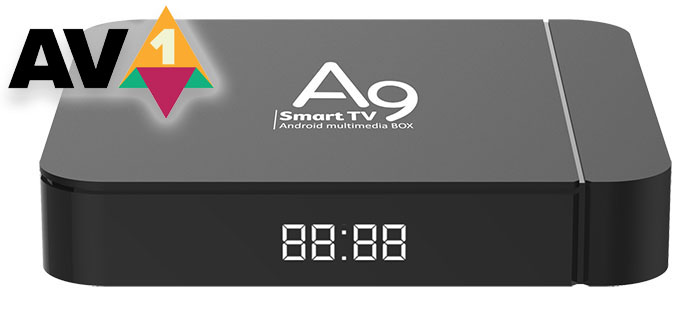
Main Advantages of the Openbox A9 Ultra HD Set-Top Box:
- New 4-core Cortex-A35 Amlogic S905W2 processor
- Image processing quality up to 4K Ultra HD (2160p) at 60 FPS
- Support for the new Internet video streaming format – AV1
- Interface speed comparable to much more expensive devices
- Dual-band Wi-Fi module 2.4 GHz + 5 GHz, standards 802.11n and 802.11ac
- Built-in Bluetooth module for remotes and headphones
- HDMI CEC – control the set-top box and TV with a single remote
- Digital optical audio output S/PDIF
- Operating system: Android 11 Red Velvet Cake
- Built-in AppStore for easy installation of popular apps
- Flexible customization of the box menu, shortcuts, and even the Power button
- OTA – updates of new software via network
- Ability to set any app to auto-start
The set-top box comes with 2 GB of RAM and 16 GB of internal storage using new chips from leading global manufacturers (no need to be surprised – many devices on the market use so-called “second-hand” chips).
Of course, there will be experts who say “this amount is too small” and that “my computer has long had 16 GB, 32 GB, or even 64 GB of memory!”
Here, the question to consider is: why does a modern Android IPTV/OTT set-top box even need RAM?
RAM is used to load the operating system itself and the apps the user works with. While on a computer it is perfectly normal to run a dozen applications and switch between them quickly, with set-top boxes things are simpler.
During a typical evening in front of the TV, one might watch a couple of shows and a movie via services like Sweet.TV or Megogo, and then check what’s new on YouTube. Is it worth paying extra for memory that is not actually used? Let everyone answer that for themselves.
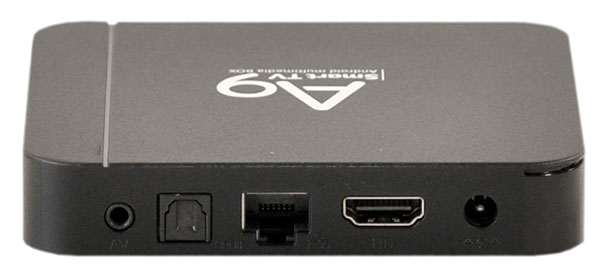
Openbox A9 Ultra HD Ports:
- MicroSD slot for expanding internal storage
- 2 × USB ports for flash drives and external hard drives
- AV – analog video output for RCA connection
- Digital optical audio output S/PDIF
- Fast Ethernet for a more reliable network connection
- Of course, digital HDMI 2.1 output
- DC IN – 5V 2A power supply
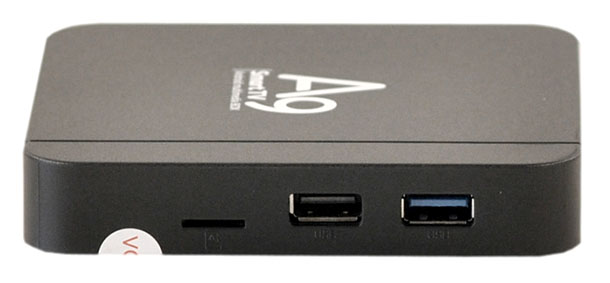
The list above may not seem impressive, but we now live in a time when all that is needed is to connect the set-top box to the TV via HDMI, provide power, and connect it to the Internet.
Large boxes with three SCART ports, external S-ATA, RF modulators, and the like are now a thing of the past.
The package already includes a high-quality HDMI cable. It is recommended to use this cable, as it guarantees trouble-free performance at all resolutions.
The power supply has sufficient capacity to ensure stable operation of the device. High-quality components were used in its production, including electrolytic capacitors, which guarantee long-lasting performance without failures.
The output parameters are 5V and 2A, so be careful not to confuse it with adapters from other devices that provide 12V. Using the wrong adapter could completely damage the set-top box.
The remote control of the Openbox A9 Ultra HD is exactly the same as in the Openbox A4 and Openbox A8 series set-top boxes.
At first glance, it may seem somewhat minimalist and too small in size. However, once you start using the set-top box, you realize that the remote fits perfectly in the hand and all essential buttons are within easy reach of the thumb.
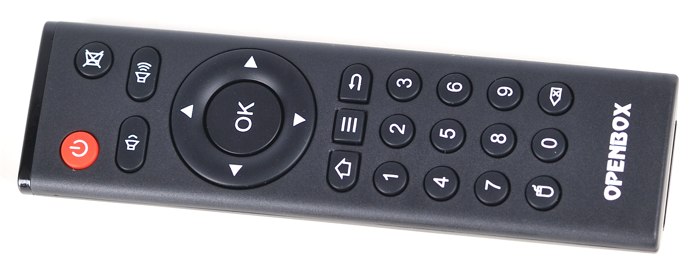
The set of buttons and their layout have been redesigned according to modern requirements, removing unnecessary ones. For example, why highlight a PVR button block when rewinding and related functions are handled by the arrow keys (left/right) in almost all apps?
As a result, we have an excellent remote with a minimal set of buttons that still allows comfortable use of the device.